









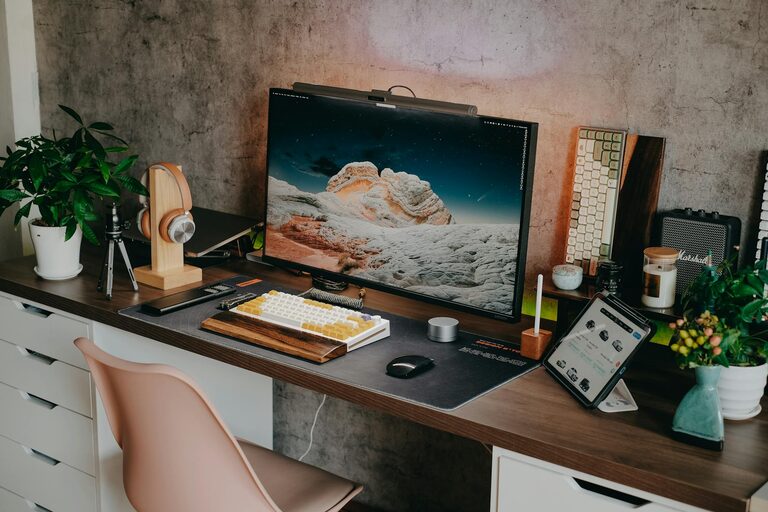
Creating an organized and comfortable home office is essential for maximizing productivity and maintaining well-being while working remotely. Whether you work from home full-time or occasionally, having a dedicated and well-arranged workspace can make a significant difference in focus, efficiency, and overall job satisfaction.
This guide offers practical tips to help you set up and organize your home office, turning it into a space that supports your work habits and promotes comfort.
Choose the Right Location
Selecting the best spot for your home office is the first step toward an organized workspace. Consider these factors:
– Quiet and distraction-free: Find a place away from household noise and high-traffic areas.
– Natural light: Position your desk near a window to benefit from natural light, which helps reduce eye strain and improves mood.
– Space and accessibility: Ensure the area is spacious enough to accommodate your desk, chair, and necessary equipment comfortably.
Invest in Ergonomic Furniture
Comfort is key to productivity and well-being. Ergonomic furniture helps prevent physical strain and discomfort.
– Ergonomic chair: Choose a chair with adjustable height, lumbar support, and comfortable cushioning.
– Desk: Pick a desk with sufficient surface area for your computer, documents, and office accessories.
– Standing options: Consider a sit-stand desk or a desk converter to alternate between sitting and standing.
Optimize Desk Organization
A clutter-free desk improves focus and efficiency. Implement these strategies:
– Essential items only: Keep only the things you use regularly on your desk, such as your computer, keyboard, mouse, and a notepad.
– Use trays and organizers: Desk trays, pen holders, and small containers can keep supplies neat and within reach.
– Cable management: Use clips, sleeves, or ties to keep cords tidy and prevent tangling.
Maximize Storage Solutions
Proper storage prevents clutter from building up and helps you find items quickly.
– Shelves and cabinets: Use wall shelves or cabinets to store books, files, and office equipment.
– Filing systems: Incorporate filing drawers or boxes to organize papers by categories.
– Label everything: Labeling storage containers and folders saves time when searching for documents and supplies.
Improve Lighting
Good lighting reduces eye strain and creates a pleasant work environment.
– Natural light: As mentioned, natural light is best, but avoid glare on your screen.
– Task lighting: Use adjustable desk lamps to provide focused light for reading or detailed work.
– Ambient lighting: Soften the room with warm, indirect lights to reduce fatigue.
Personalize Your Space Thoughtfully
Adding personal touches can make your workspace more inviting without causing distractions.
– Plants: Greenery enhances air quality and brings calmness.
– Artwork: Select inspiring or calming images.
– Organized bulletin board: Pin notes, reminders, or motivational quotes.
Maintain a Daily Routine to Keep Organized
Organization is an ongoing process. Make it part of your daily habit:
– End-of-day tidy-up: Spend a few minutes clearing your workspace at the end of each day.
– Prioritize tasks: Use to-do lists or planners to track your daily and weekly goals.
– Regular decluttering: Schedule weekly or monthly sessions to review and reorganize your office.
Manage Technology Efficiently
Technology is the backbone of a home office but can also be a source of clutter and distraction.
– Organize devices: Assign specific spots for printers, scanners, and chargers.
– Use digital tools: Replace paper with digital notes, calendars, and filing systems when possible.
– Backup data: Regularly back up your work files to avoid data loss.
Ensure Proper Ventilation and Temperature Control
Comfort includes a work environment that is cool, fresh, and well-ventilated.
– Air circulation: Keep windows open when possible or use fans to circulate air.
– Temperature: Use heaters or air conditioning units to maintain a comfortable temperature year-round.
Final Thoughts
Taking the time to organize your home office can transform your working experience. By implementing these tips, you’ll create a space that not only looks tidy but also supports your productivity and comfort throughout the day. Remember that a well-organized workspace is a foundation for achieving your professional goals while maintaining a healthy work-life balance.